DETRACTORS
Find where service fails.
Talk to customers considering cancellation to understand the friction they could no longer accept.
SuperbDelivered changes
I separated booking from profile completion, helping restaurant managers secure a slot first and add guest details when service allowed.
Context
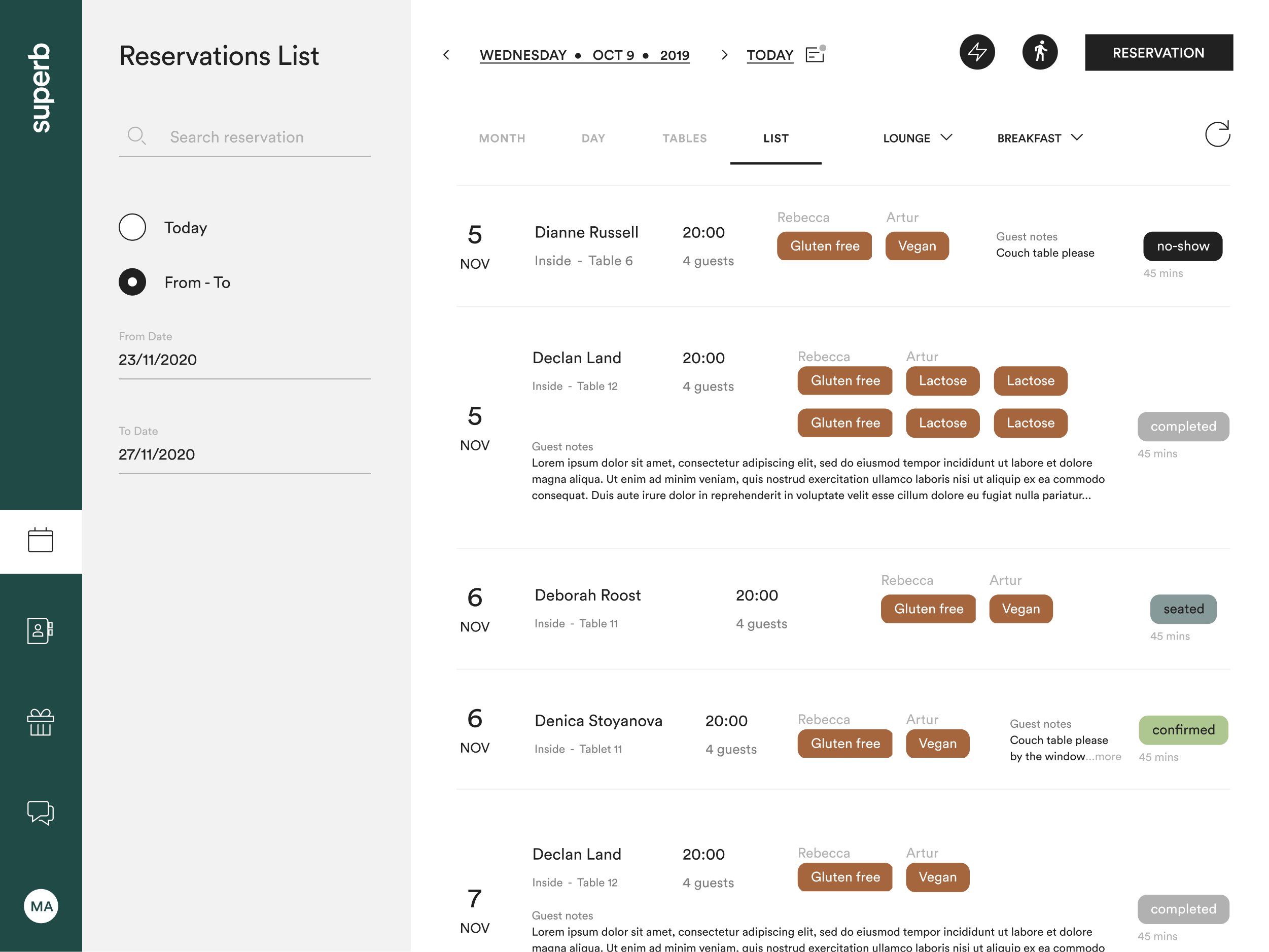
Superb served high-end restaurants, including Michelin-starred clients. Their software needed to match the care of their service, while keeping track of detailed guest preferences.
The guest form was long and poorly adapted to different situations. Walk-ins, quick bookings and a rich customer profile had been treated as one information-gathering task.
Insight
Research focused on both ends of the customer base: dissatisfied customers considering cancellation, and the ambassadors who recommended Superb. Their feedback guided repeated rounds of testing, iteration and delivery.
The design opportunity was to separate the information needed to secure a booking from the information a team could collect over time. Detailed preferences remained valuable; they did not all need to arrive first.
DETRACTORS
Talk to customers considering cancellation to understand the friction they could no longer accept.
AMBASSADORS
Use the most satisfied customers’ feedback to understand strengths worth preserving.
SEQUENCE
Let the urgent booking happen before the full guest record is complete.
Decisions
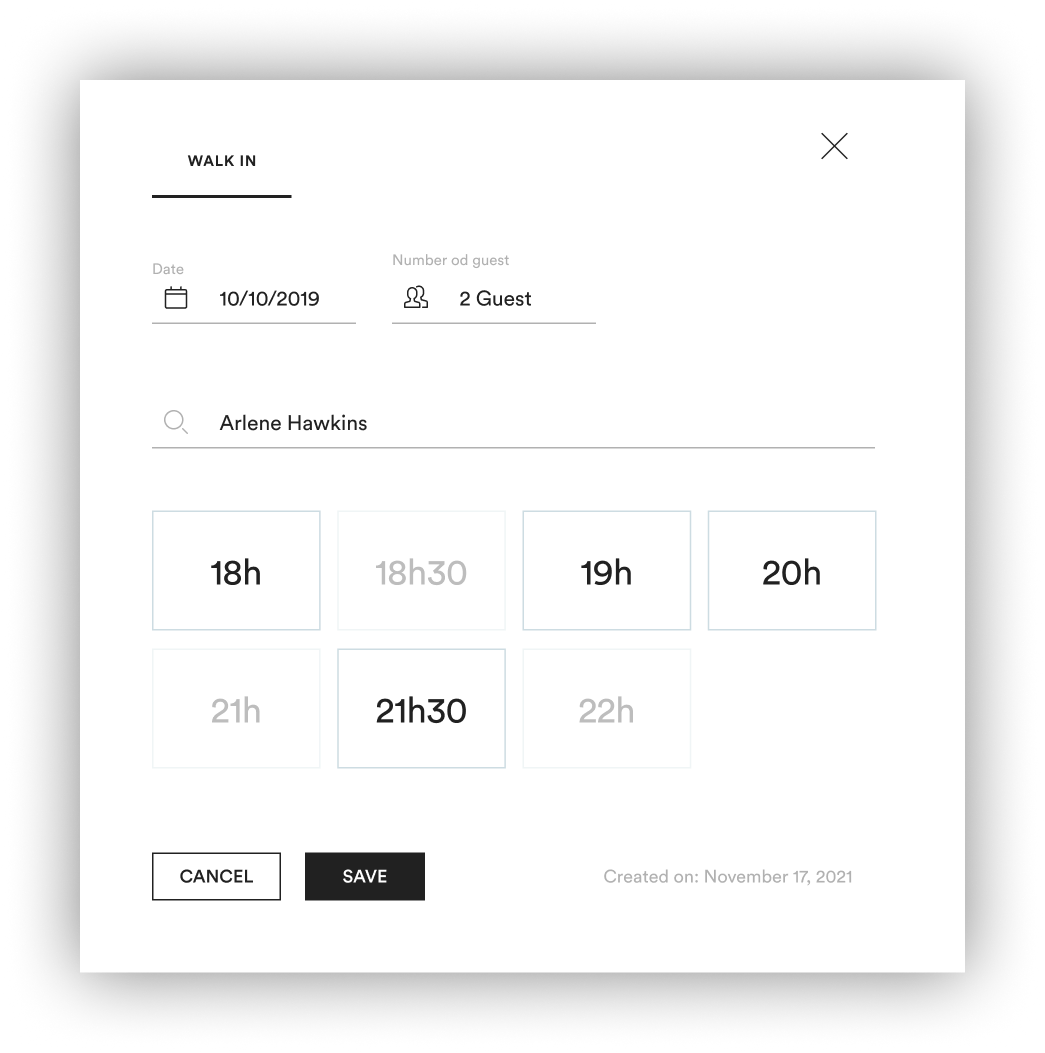
The walk-in flow was reduced to four essential inputs. As a manager typed a name, autocomplete could retrieve an existing guest’s preferences and information.
Quick booking secured the time slot before the full profile was complete. Details could be added later, with a reminder when information was still missing.
WALK-IN
Limit the immediate form to the information needed for the booking.
QUICK BOOKING
Keep the reservation moving and leave a reminder for information still to be completed.
RETURNING GUEST
Bring known preferences into the flow through name autocomplete.
Impact
The redesigned flows made the form shorter and more relevant to each use case, while keeping the ability to record detailed guest preferences.
Qualitative customer feedback reported an improved experience and higher satisfaction among new and existing customers. The work connected that feedback to concrete changes in how the product supported restaurant service.
What changed, and where
The change simplified the moment of booking while preserving the detail that makes hospitality personal.
Restaurant service
Delivered interface changes
Guest relationships
Documented product behavior
Product decisions
Qualitative customer feedback
Customer satisfaction findings are qualitative; no numerical timing or satisfaction result is claimed.