BUSINESS
Build a direct connection.
Give guests a way to reach the restaurant beyond marketplace discovery and discounts.
iFoodPWA tested · App built
I connected dine-in, delivery, and pre-pay around restaurant operations, with direct ordering channels and account creation delayed until it offered value.
Context
Restaurants had to keep competing for visibility and running promotions. The customer relationship remained with the marketplace, making it hard for a restaurant to build a direct channel to its guests.
Research also exposed the limits of the operator’s capacity: small teams, unreliable connectivity, manual management, and little time to learn another tool. The work had to help restaurants within those constraints.
BUSINESS
Give guests a way to reach the restaurant beyond marketplace discovery and discounts.
OPERATIONS
A small restaurant cannot absorb a sophisticated management workflow simply because the platform offers it.
RESEARCH
Restaurant operations and guest behavior had to inform the same product direction.
Insight
Guests wanted to order and pay ahead, then spend less time waiting for food or the bill. A small adaptation of the takeout flow let us test that behavior before committing to a larger product change.
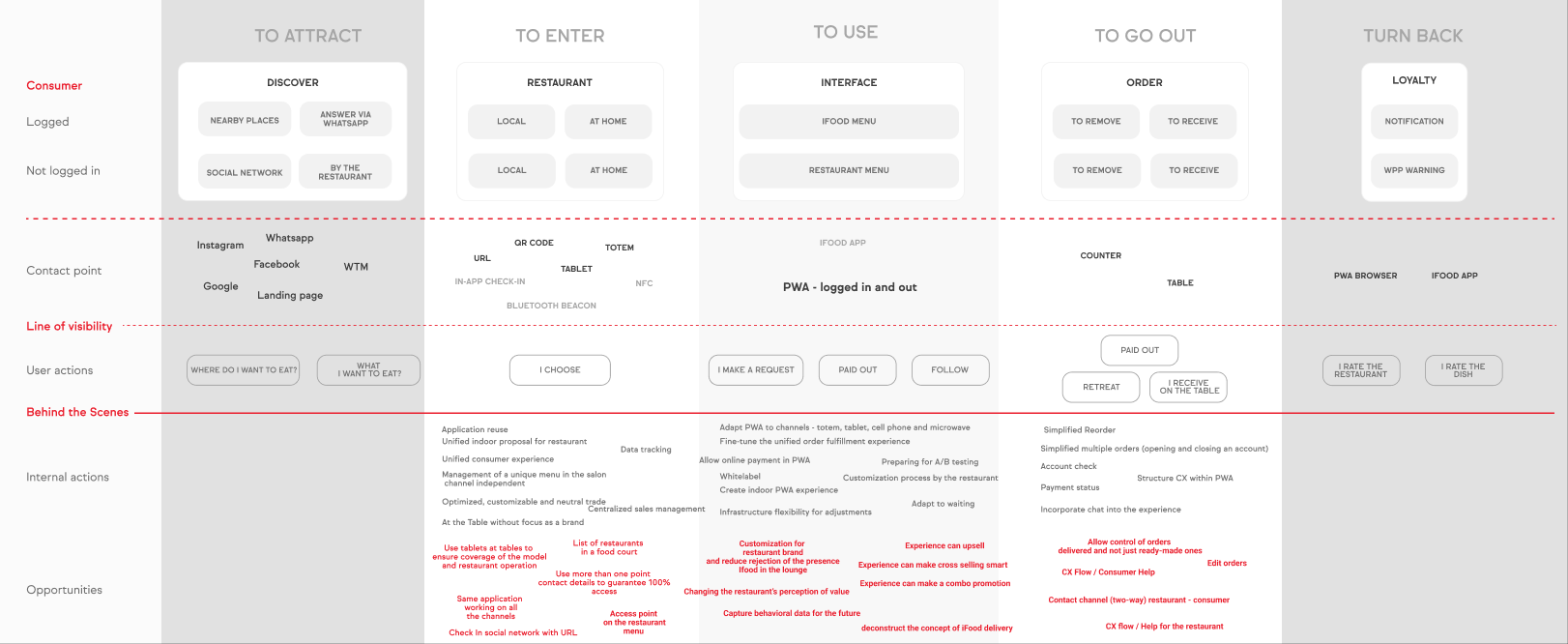
The service blueprint connected the full journey, from discovery to returning. It revealed how a restaurant’s QR code, delivery link, tablet, and food-court kiosk could lead into one ordering experience.
Decisions
Testing showed that dine-in guests resisted creating an account before ordering. We moved registration to the moment it offered a clear benefit: paying in the app and avoiding the wait for the bill.
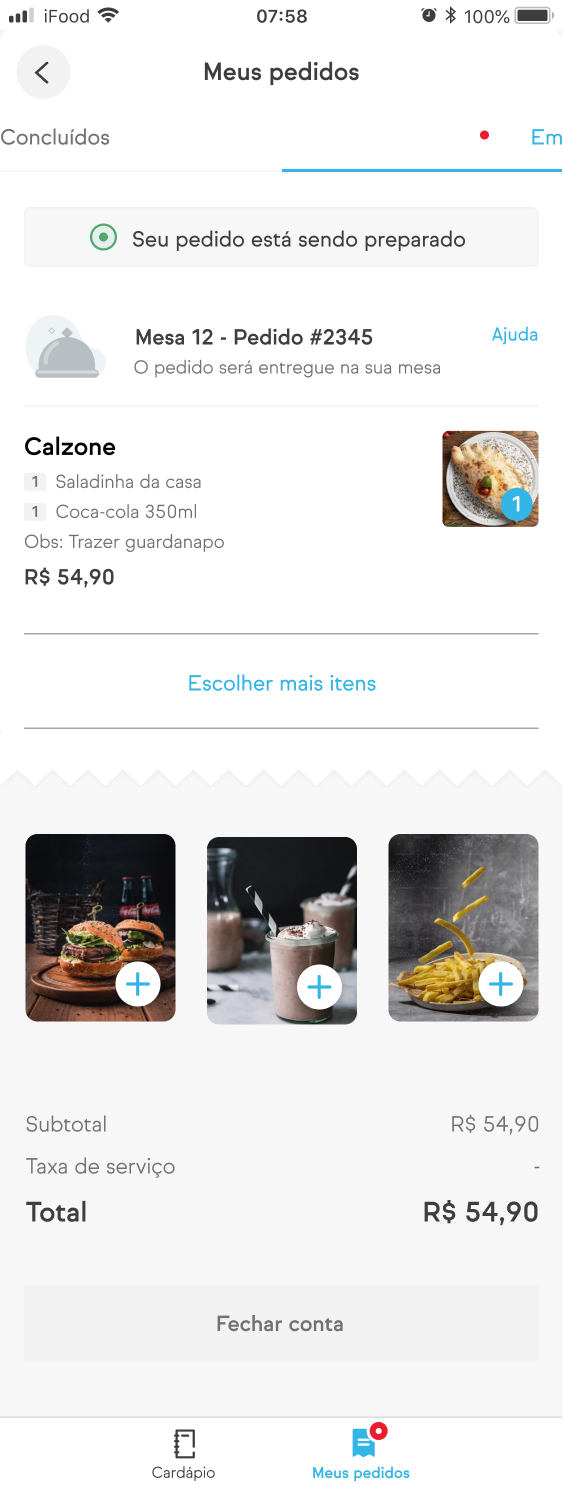
WhatsApp brought order tracking into a familiar channel. An open tab let guests add items and settle once, with recommendations placed before closing the bill. We tested a customizable PWA, then built an app.
ENTRY
QR table menu, delivery URL, restaurant tablet, and food-court kiosk.
IDENTITY
Let guests order before asking them to create an account for in-app payment.
CONTINUITY
Order tracking and the open tab connect the restaurant with guests throughout the meal.
Impact
The work extended ordering beyond delivery into dine-in and pre-pay. One experience supported four entry points, with direct contact and repeat-order opportunities designed into the restaurant journey.
A separate sales-summary experiment challenged another assumption: making financial data easier to access did not significantly increase engagement with Store Control. It showed which partners could use the data and where the management barrier remained.
What changed, and where
The work expanded ordering around restaurant service and used research to make more precise product decisions.
Guests
Research-led design changes
Restaurants & product
Tested PWA and subsequent app
Research & decisions
Documented experiment learning
Ordering and Store Control were separate initiatives. These outcomes describe product delivery and research findings, not measured revenue or retention gains.