CANON
What holds.
Committed world rules and creative foundations.
Arbor ForgeIn development
Creative direction, product thinking, and production systems meet in VERITAS, an RPG built around observation, testimony, and consequence.
Context
A growing world accumulates decisions across story, art, interaction, and engineering. The next iteration can lose the reason the previous one existed.
I’m building Arbor Forge around shared creative knowledge. VERITAS is the product through which that studio model is taking shape.
Insight
The studio needs to distinguish what is committed, what is in production, what is still an idea, and what should be remembered after it changes.
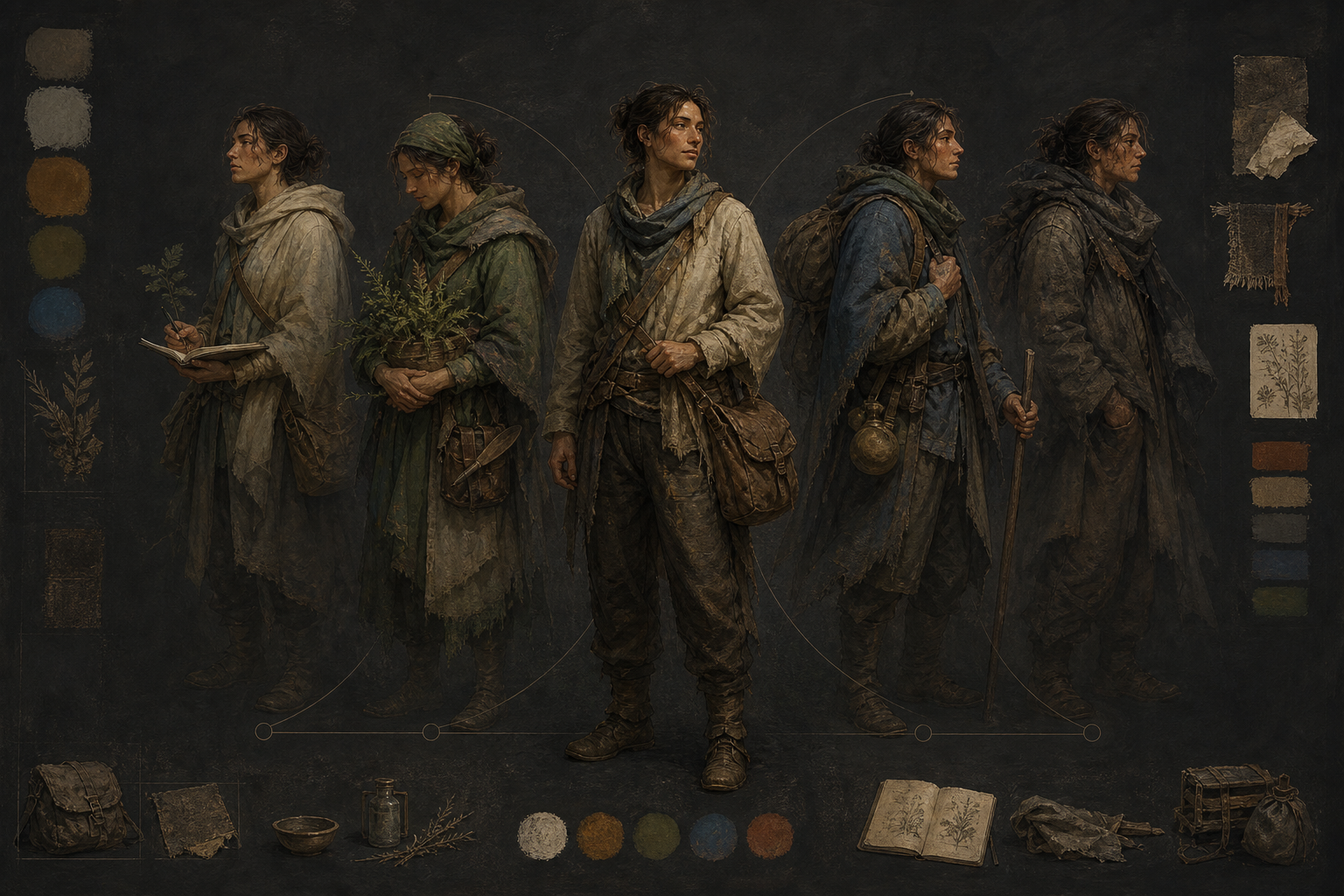
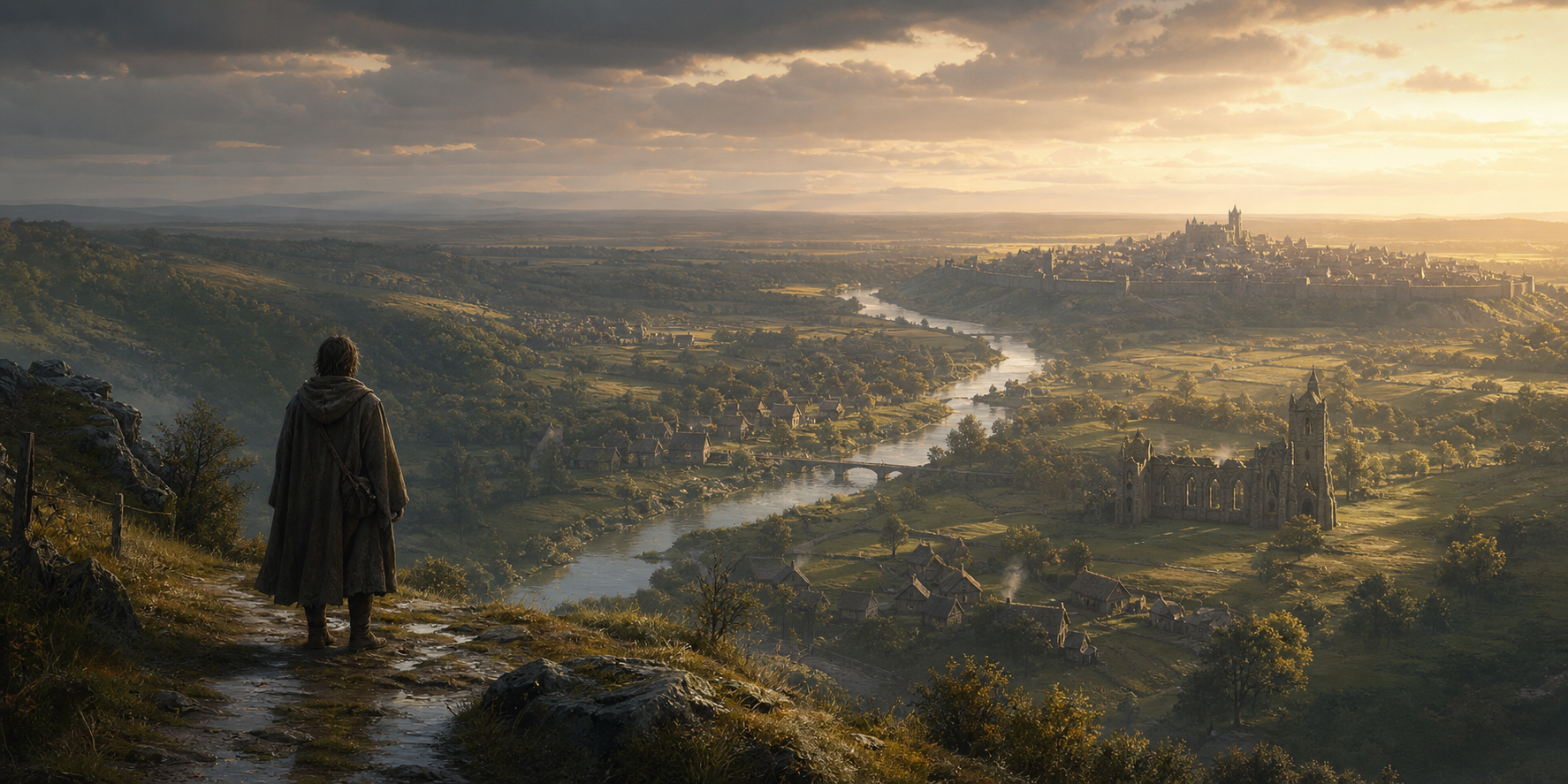
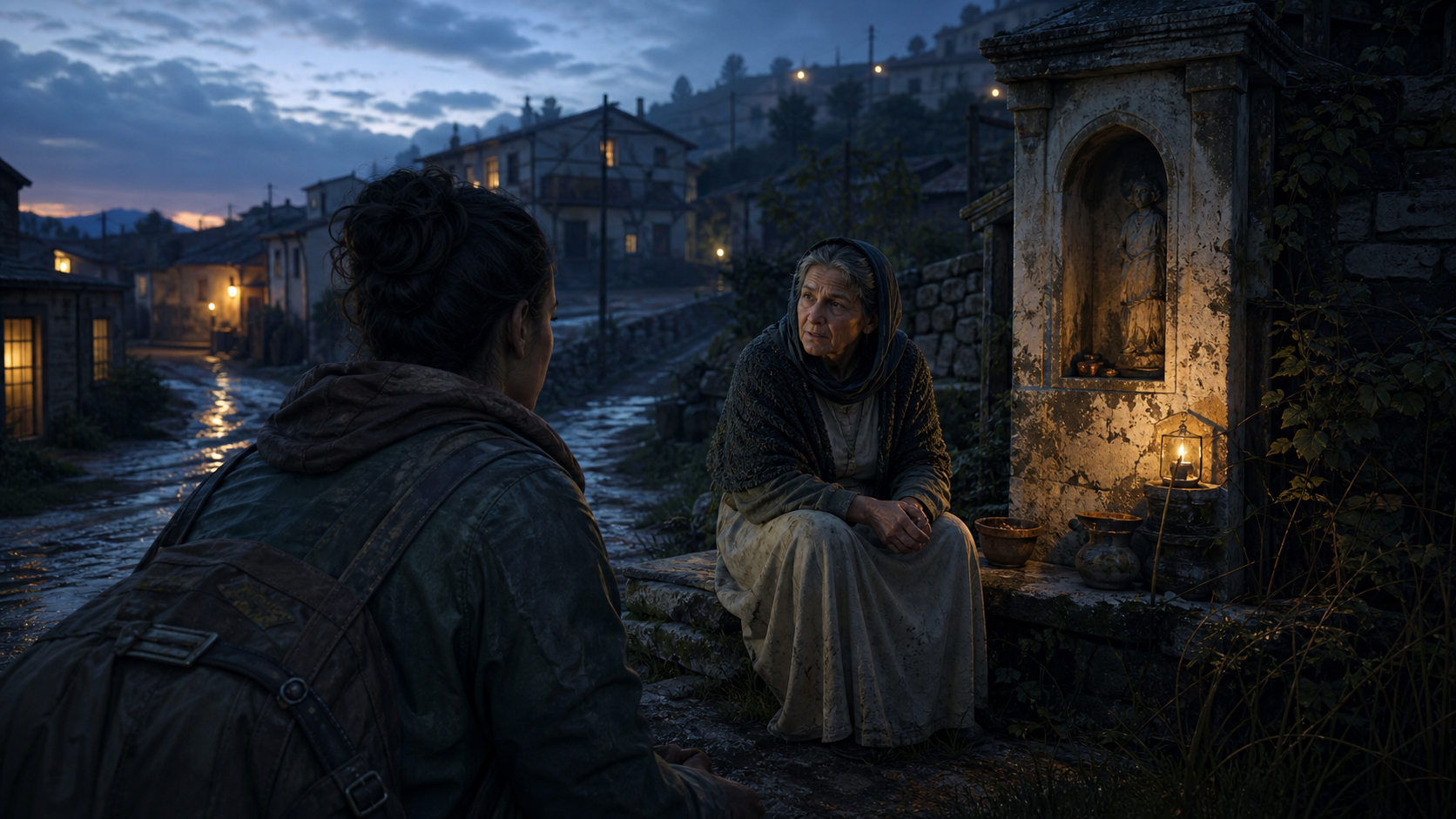
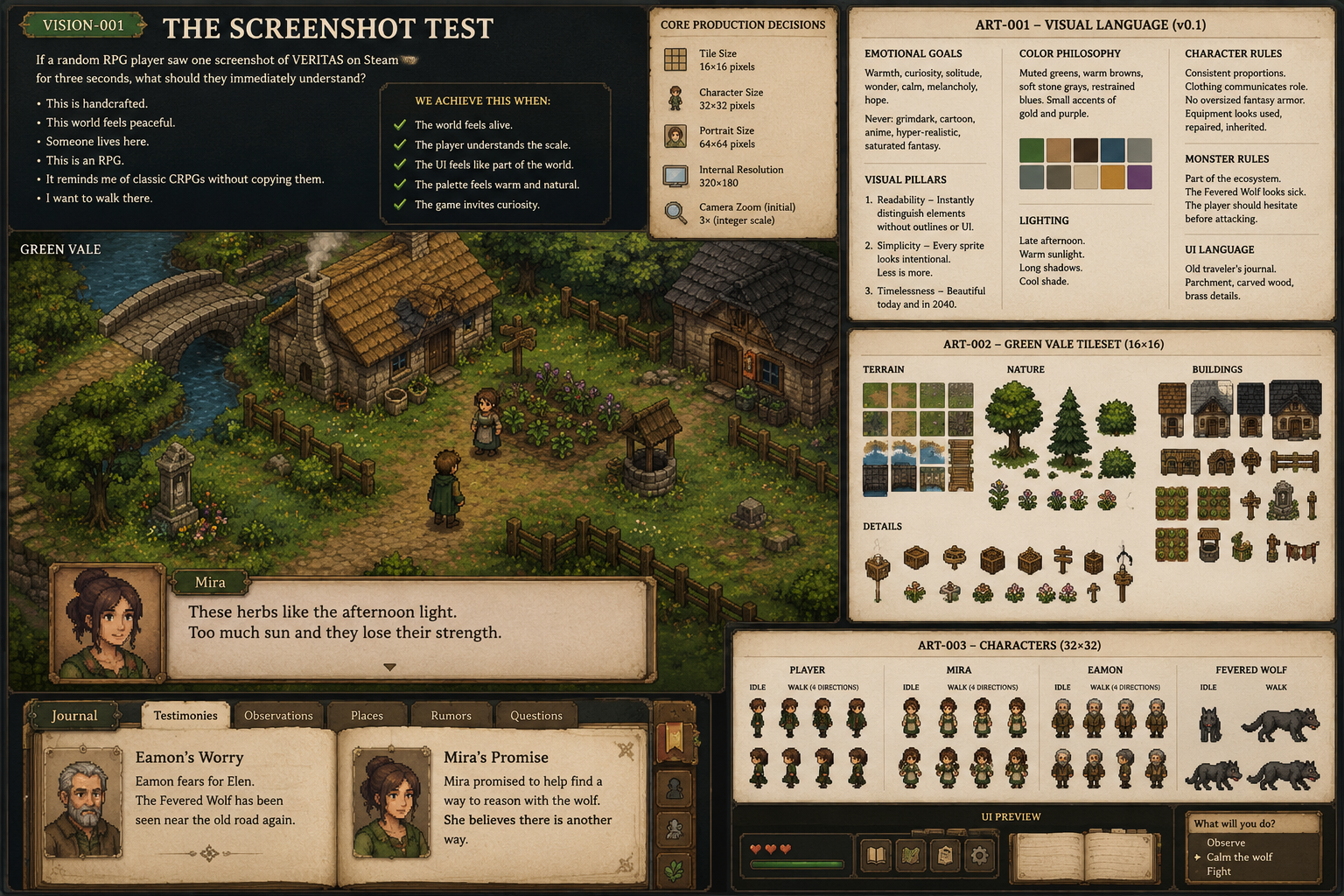
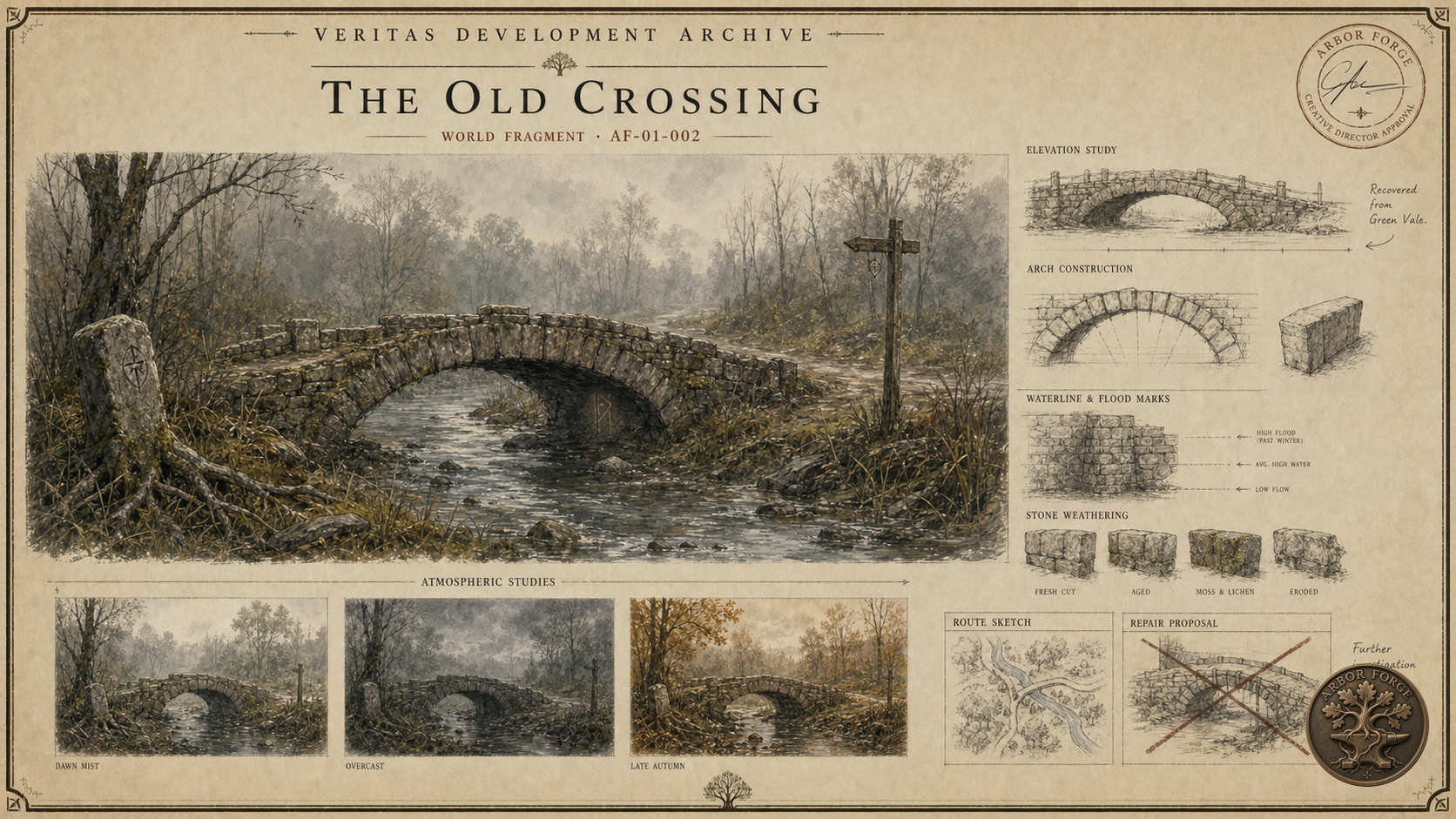
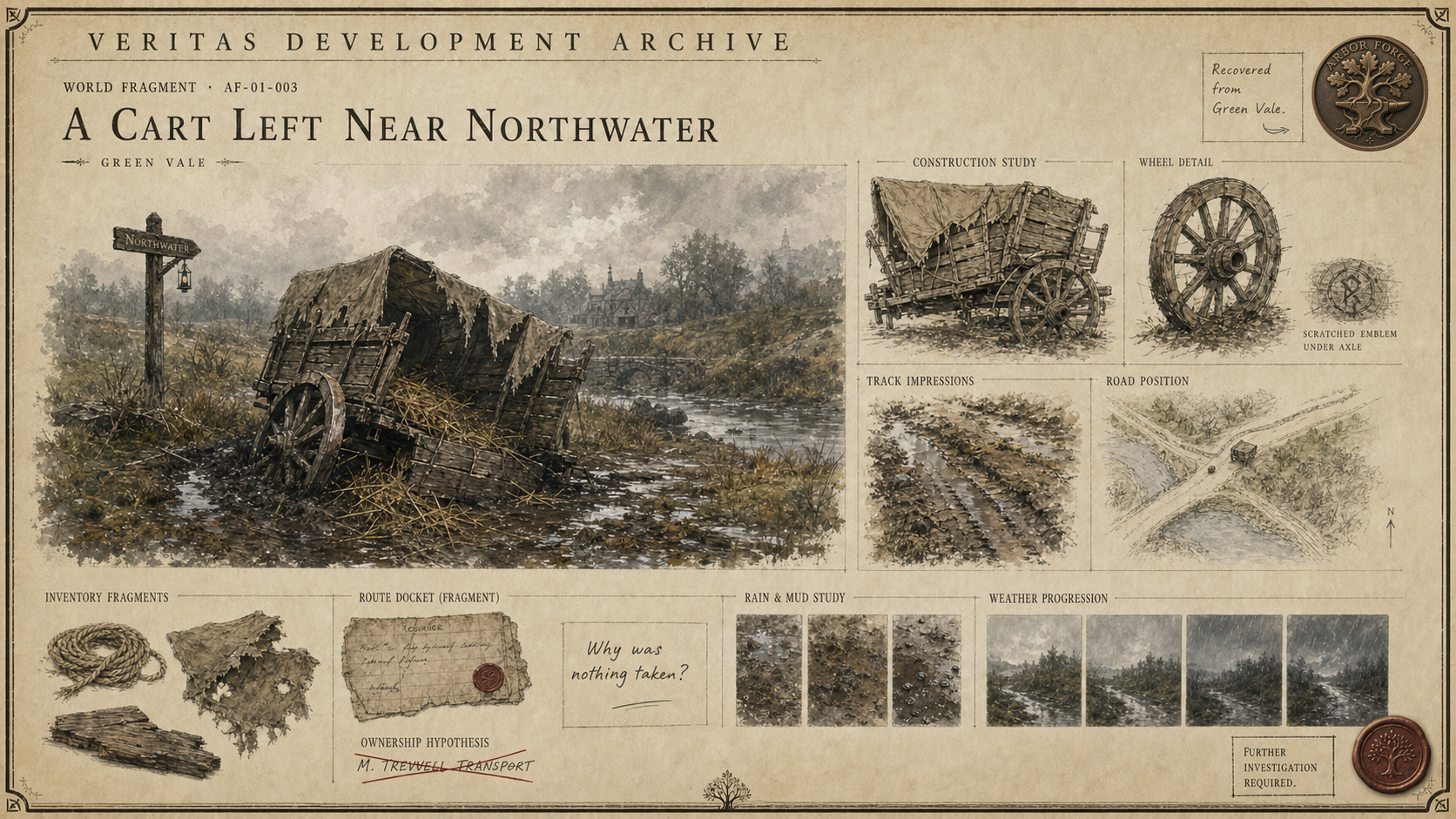
The museum preserves visual hypotheses with their questions and decision status. Environment, character scale, palette, and journal UI can be considered together while the direction is still being explored.
CANON
Committed world rules and creative foundations.
PRODUCTION
Work with ownership, requirements, and a reviewable state.
SEED
Ideas open to exploration and testing.
MUSEUM
Earlier forms and decisions preserved with their intent.
AI-assisted visual study from the museum. The direction remains exploratory.
Decisions
The production framework makes creative decisions concrete: what belongs to the world, who owns an asset, which elements are provisional, and what is ready for review.
Human-directed AI works inside those boundaries. The archive connects visual studies to material detail, unresolved evidence, and the reason a place belongs in the world.
DIRECTION
Connect the artifact to the world, its rules, and the reason it exists.
OWNERSHIP
Identify asset ownership, provisional content, and handoff requirements.
REVIEW
Use explicit checks so work can be discussed and improved across disciplines.
Impact
VERITAS connects observation, listening, partial truth, and consequence. Worldbuilding, visual direction, and production standards protect the same experience.
The contribution so far is the product and production system. The next proof comes from people playing it and making sense of their choices.
What changed, and where
VERITAS connects a body of creative work to a production practice that preserves decisions and makes work reviewable.
Creative experience
Artifacts and prototype
Studio practice
Production framework
The next proof is a human playtest: can someone understand the world, form a judgment, and recognize its consequence? Studio efficiency, player benefit, and commercial outcomes have not yet been measured.